AGAIN HE HAD NOTHING to do. Well, not exactly nothing. His inbox was full of applications for building permits. Work a clerk could do, for fuck’s sake. No, work a clerk should do. Not him, a member of the Virginia Bar with responsibilities. And a Faber in fact if not in name. His brass name plate should read Scion.
There were perks, though. Bran leaned back in his leather executive chair and swung around to look out his office window at the oaks, still summer golden-green, and the smoked glass office building across the street — Marshall Street, named after the Founding Father, not his father; the big mahogany paneled office one story beneath the mayor’s suite; his salary.
And the women. Richmond’s city government teemed with smart, accomplished, single women, many of whom knew he was a descendant of one of Virginia’s Founding Families, knew he came from old money and new (bags and bags of it), knew his aunt was a magistrate, knew about his uncle the famous dead writer, knew he was single and in theory available.
The really savvy ones stayed out of reach. They knew or had been warned about the strain of crazy that ran in his family: his great aunt who daily talked with God, thankfully dead now; his drunkard grandfather, also dead; his great-grandfather who had to be locked away after he disrupted the State Assembly ranting about the Illuminati, the Masons and the Kabbalah, though today’s insane alt-right conspiracy theories made that less of an embarrassment than it was when he was in school.
Branford spun his chair back to the desk and the humbling task of processing building permits. There were so many. He spent the time until lunch loading them one by one into the city’s automated system and moving them along for approval without bothering to review each, because why. There was only one important one anyway, the one the Commissioner was handling personally, because of course the money and the politics.
He knew the project might fall a teeny bit on the wrong side of the law — two feet in the shit he’d advised her — but she relied on him to find ways to make shit smell like lavender and he had. He was proud of his work. It could stand up to any challenge the property owners who would be displaced could afford to muster.
Neither of them cared that the deal would fail the general public’s smell test, because who really cared about the general public once election day was past? Mutually-beneficial agreements were part of the business of government and they both knew it was men and women like the backers of the project who really ran the city. After all, that had included men and women in his family for generation upon generation reaching back as far as the founding of Virginia Colony.
Then there was his own belief derived from his readings of popularized science: corruption – if that’s what one chose to call it – was one more symptom of the universal principle that order inevitably descends into chaos, the wasting disease of the real. Bran loved the idea of bureaucracy slowly leaching energy away from the universe into the quantum stew that generates spacetime, atoms filling out forms before shedding neutrons, electrons stacked up waiting for permission to ripple into electric currents, galaxies bribing building inspectors to approve new star formations.
At noon Bran logged off the city’s computer system and headed to lunch with the sponsors of the development project. Passing through the outer office between the two symmetrical secretaries sitting at their symmetrical desks he shot his cuffs, showing off the gold and diamond at his wrists, sure they admired his bespoke suit, his weekly two hundred dollar haircut. Or were their eyes so glued to their computer screens that they didn’t notice his passing?
At the doorway to the paneled corridor he said, “I’m joining the Commissioner for lunch.”
Without looking up the secretary on the left, said, “We know.”
But Branford Patrick Marshall was already half way to the brass elevator doors.
Lunch was twenty minutes up the river road in a private room at the golf club his mother’s family helped found and where he was a Board member. The suspicion that the Commissioner and the developers included him only so they could use the club to keep the meeting private was a shadow in Bran’s mind, so faint and so well-hidden that he wasn’t aware of it, yet it woke in him a strain of insecurity that he refused to acknowledge, which spawned a feeling of anxiety that itself spawned the conscious thought that the Commissioner was merely humoring him. Nevertheless, he ate prime rib and drank grand cru Pomerol comfortably among so much money and so much power.
The arrangements for approving the development successfully concluded over coffee, he went back to his office feeling he’d contributed to the effort. The feeling didn’t last long. He’d barely settled back into his office when his mother called.
“Honestly, I don’t know what to think about your brother,” she said.
“Hello, Mother.”
"Yes. Your brother’s gone and gotten some girl pregnant.” Her voice dripped with loathing.
“Well, he’s accomplished something,” Bran said.
“Don’t you start with me.”
“Seriously, Fern. You’ve been going on about wanting grandchildren since I hit puberty. Now it looks like Mikey’s giving you what you want. So what’s the problem?”
She said, “Who is this girl? Some white trash honeypot?”
A vestigial feeling of sibling solidarity impelled Bran to say, “Maybe she loves him. Maybe he loves her. Maybe we should give them the benefit of the doubt.”
Her tone slid effortlessly into sarcasm, “I’m sure you’re right. His money is so unimportant. He’s got so much more going for him.”
There: her disdain for her own son, Mike the jock. Mike the disappointment. “The money can pay for an abortion,” he pointed out reasonably.
“Catholics don’t do abortions.”
Bran laughed. “Of course Catholics do abortions. All the time. We just don’t tell the priests.”
“Well, our family doesn’t.”
He’d paid for two already, even though the women should have been more careful about birth control – another thing almost all Catholic women did, married or single. “And if she’s not a Catholic?”
“In Louisiana everybody’s a Catholic. They call their counties Parishes.”
That was ridiculous. But he didn’t need to continue needling her. “Okay, so again, what do you want me to do about it?”
“Talk to him.”
“What do you think that will accomplish?”
“I don’t know. I don’t know. I don’t know what to do.”
Which meant she’d started out talking to Mike, moved on to lecturing him about his stupidity, then proceeded directly to yelling threats at him while hardly taking a breath. At which point he must have hung up on her and why wouldn’t he?
Bran said, “I don’t know either. He’s twenty-six. If he wants to marry this girl, start a family, it’s his life.”
“His life to ruin.” Now his mother sounded like a sulking schoolgirl. “And he’ll blame us. His father. Me.”
It was the tone in her voice that got him. “Okay, Fern. I’ll call him.”
“Good. Let me know what he says.”
“I will.” Bran replaced the receiver in its cradle and stared at the phone as if he’d never seen it before, a messenger of his mother’s distress.
The Commissioner pushed the door open and stuck her head in. “Haven’t you processed that application yet? What are you waiting for?”
“Should be on your desk,” he lied, striking keys randomly and peering at the computer screen.”
As the door closed behind the Commissioner he thought he heard one of the secretaries snicker. He didn’t care. If they only knew.
Bran brought up the application, approved it and forwarded it to the Commissioner’s computer for signature. It would be on her desk, virtually, by the time she got back to her office.
She was a demanding boss. If he could last out a year working under her, being involved in projects like this one would guarantee an offer from one of the bigger developers in town. In the meantime he had favors to do, chips to earn, connections to make, skeletons to collect.
Having forwarded the project application, his work was done for the day, maybe for the rest of the week, and it was only Monday. So he screwed in his ear buds and called his brother on his cell phone.
Mike picked up the call almost immediately. “Ho, little brother.”
Bran heard outdoor noise, cars and trucks growling past. “I hear congratulations are due.”
His brother laughed. “So you’ve spoken to our mother. And she told you to talk to me. Right?” He sounded happy.
“That’s about it.”
“Yeah, well, I was going to call you anyway,” Mike said. “Cherie and me got married last month.”
“Whoa! Just like that? Why didn’t you tell us?”
“Yeah, well, there’s lots of things I don’t tell the family.”
A shared truth that needed no response. “You told Mother about the baby, though.”
“Cherie insisted.”
“But she didn’t insist you invite us to the wedding?”
“She did. But I was afraid if she met Mother she wouldn’t marry me.”
The thought burst out of his mouth before he could stop it: “They’re going to cut you off. You know that, don’t you?”
“God damn it, Bran, I can make my own way.”
Cherie must be some kind of woman if she’s got him talking like that. “Not if you’re counting on a career in pro soccer.”
“’Course I can. I got a tryout with Philadelphia on Wednesday. That’s what I was gonna call you about. We’re flying up so we can stop off on the way tomorrow and spend a day. My agent—”
“—you have an agent?”
“’Course I do. He says if Philly don’t pan out I can hook on to one of the European league teams. Get noticed. Move up.”
“If you go that route will Cherie and the baby go with you?”
Instead of answering the question his brother said, “We’re staying with my friend Carlos; he lives off Monument past the Art Museum. I don’t think it would be a good idea for us to stay with the parents.” Bran remembered Carlos. He’d been one of the few of Mike’s friends to treat him decently.
The location rang a warning in Bran’s ear. “Where exactly doe he live?” Mike told him. Carlos lived in the middle of the site where the new development project was slated to tear down everything. One way or the other, Carlos would have to find a new place to live in a year. Bran was surprised to find himself bothered knowing the deal would harm him.
Mike was speaking. “So I – we – were thinking maybe meet with the family for dinner.”
Bran didn’t have anything on after work Tuesday and watching Mother deal with Cherie as a daughter-in-law could be entertaining in a cringeworthy way. “I’ll call the Club and reserve the Founders’ Room.”
“Mm, no. That’s enemy territory. How about someplace neutral?”
Even better: Mother would have to behave in public. “I get that. I can make a reservation at the Jefferson. Say eight unless I tell you different.”
“That’ll work! Thanks, little bro.”
Bran’s feelings were confused, greedy and envious in turn: as though his brother had passed him by in life, moving forward while he was stuck, though if Mike’s progress included being cut off there could be more for him when he eventually married one of the women his mother paraded in front of him.
Mike interrupted Bran’s thoughts. “You’re going to tell her we got married, ain’t ya.”
Bran snorted. “Nothing she can do about it now. And she did insist I call you.”
“True dat.”
Bran thought the NOLA phrase sounded odd coming out of Mike’s mouth but he ignored it and said, “She already knows she’s getting a grandchild.”
“Maybe not the grandchild she wants. But the grandchild she’s gonna get.”
Bran heard steel in his brother’s voice along with the accent. He couldn’t wait to meet Cherie.
#
Instead of calling his mother with Mike’s news, Bran texted her: mike + mrs mike!! tomo dinr jefrsn hotl 8 pm. He could have spelled it all out properly but she hated when he used what she called Millennial Cant and, knowing the shitstorm to follow, he indulged himself with an anticipatory dig.
He didn’t hear back immediately. When he did, she surprised him with a text of her own: Meet @ 6 Joe’s on Strwbry. So Boomer: she used capital letters in her texts.
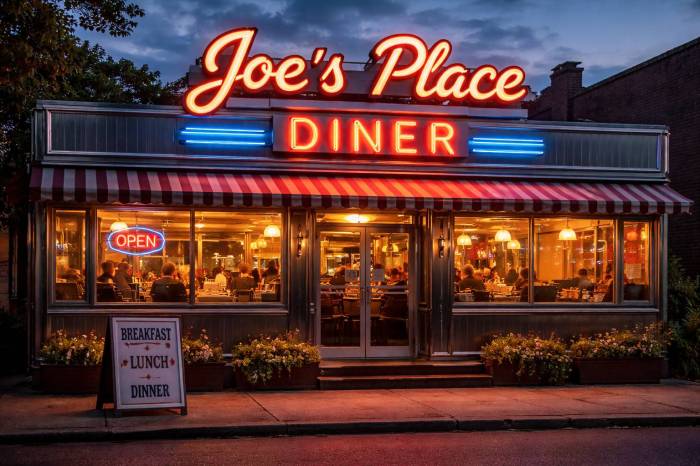
Joe’s Place on Strawberry Street was one of the family’s geo-nodes around Richmond. It once belonged to his famous uncle Buddy, the building not the bar, and it was across the street from the modest house his uncle live in, now a B&B, The Faber Inn where, for whatever her private reasons, his mother helped out part time.
When Bran walked in through the open door to Joe’s he had to push his way through the after-work neighborhood crowd standing three deep along the counter. His mother was sitting in a back booth, a tall, straight-backed, blonde Southern woman in her late fifties with a highball glass half full of what Bran knew would be a bourbon old fashioned.
He slid in across from her. She lifted the glass and drained it. They nodded to each other. He braced for the shitstorm.
A waitress drifted by. She wore a tight VCU Rams tee shirt and hadn’t bothered with a bra. “What can I get you?”
His mother cut off his obvious reply. “Same again, Tammy Jo.”
The waitress mumbled, “Mrs. Marshall,” and looked at Bran.
“Same for me.” Sure, dull the impact.
Tammy Jo nodded her head and drifted away.
“You know her?” Bran said.
“She was in Junior Cotillion with your brother. One of the Claibornes from New Kent County. Long history. No money.”
“Jesus, this is a small town.” Bran watched Tammy Jo as she navigated her way to the bar: not heavy, not thin, the curve of her ass balanced the swell of her chest nicely, curly brown hair. She might be another child of an old Virginia family but she wasn’t above hard work. His mother’s voice brought him back.
“Since you didn’t ask, after your news I needed a drink before going home. Why did you send me a text rather than call me?”
Because I didn’t want to listen to your screaming. But he said, “I’m a Millennial; it’s what we do.” He watched her face carefully, looking for a telltale warning she was about to explode. To his surprise she merely sat across from him admiring the color of the bourbon in her glass. The pressure of her rage must be barely controllable, he thought. The alcohol surely would loosen her grip on it and he was in the firing line.
They sat together silently that way until Tammy Jo came back with their drinks. He had a momentary urge to invite her to join them for dinner tomorrow but no, that wouldn’t do. Did she have a boyfriend? Of course she must. Still.
His mother took a sip of her cocktail, then placed the highball glass carefully on a cardboard coaster. The slow precision of her movements brought him back to the moment and sent a tingle of fear to his chest.
"Jesus Christ, Branford, don't you ever do anything like this to me."
His eyes followed Tammy Jo. “Wouldn’t think of it, Fern.”
She turned the glass around in her hand like she was turning the knob of a radio, peering into the tea-colored bourbon, wiping down condensation on the outside of the glass with a fingertip.
“Fuck!” she screamed and pounded the table with a fist. “What was the little shit thinking?”
Bran jumped. The glasses bounced and thunked on the table. Unused silverware clinked. People turned around to look.
She sighed deeply, air rushing out of a balloon. “Sorry. What’s done is done,” she said. “I guess I’m somewhat to blame. I’m sure your father will say so.”
That was a new side of her. He didn’t know what to say so he examined the backs of his hands.
She lifted the glass to her lips. The gold and diamond bracelets she regularly wore on her thin wrists tinkled against each other as she drained her cocktail. “At least I’ve got a day to prepare. Fill me in on your conversation with your brother.”
Bran reported, on alert for more outbursts, but none came. She’d been defeated by a girl she’d never met. When he finished reporting she sat back against the booth’s maroon leather bolster. “The girl seems to have taken your brother in hand. He needs that. Not like you.”
Bran was watching Tammy Jo cruise through the busy room, taking orders and collecting empty glasses on a tray. “No, Fern. I don’t need to be taken in hand.” But of course he knew he always had been.
“Join us for dinner tonight,’ she said.
“No, I’ve got plans.” Was she hoping for an ally? The last place he wanted to be was at the table between his parents when she told his father about Mikey’s marriage. And maybe he did have a plan. Tammy Jo wasn’t anything like the women at work: not sleek, not an office worker, not obviously upwardly mobile, He couldn’t keep his eyes off her.
His mother slid out of the booth and stood over him. “So, tomorrow at eight.”
“At the Jefferson. Reservation is in my name.”
She leaned over as if to kiss him on the top of his head but stopped, straightened, turned and left him with the tab.
A blackboard on the wall listed the day’s specials. He was inclined to order the homemade lasagna but he didn’t want anything sloppy that might stain his shirt so he settled on the fried chicken. Bran caught Tammy Jo’s eye and ordered.
When she brought his food she said, “Anything else?”
Handing her the nearly-full glass he said, “I’ll take a Bud instead. And when do you get off?”
“You’re Mikey’s little brother, right?”
“Younger brother, yeah.”
She smiled at him. “I leave here when the work is done.” She walked off.
Bran looked down at his plate of fried chicken and shook his head, admiring the smooth sidestep. But the chicken was crispy and moist, the mashed potatoes with gravy were creamy, the beer was cold and he could watch Tammy Jo moving around the tavern. He left her a good tip, not too big, not too small. No hard feelings.
#
Filled with a four-course, four-star dinner and expensive wines (“but none for the expectant mother!”) Mike and Cherie sat in Bran’s living room at their own after-dinner party. “You’ve got to say she did her best,” Bran said.
Mike said, “More than that, she made a real effort.”
Bran thought his brother looked subtly changed, the same size but taking up more space. Cherie, on the other hand, was a slip of a woman, small and narrow everywhere except her abdomen, which was beginning to show the baby growing inside her, a brunette Southern girl with soft features and large brown eyes, impeccable manners and social skills to charm even his mother.
Mike said, “True dat.” He leaned back in the loveseat and dropped his arm across his wife’s shoulders. “The mask cracked a couple of times but all in all she was good.”
Bran’s eye caught the thin gold band that circled his brother’s left ring finger. Nodding at Cherie, he said, “When you told Fern you compose music for answering machines and smartphone apps I thought she was going to spit up her soup.”
Cherie giggled. “Come on, you. She was very nice to me. All the baby things she gave us? I love them.” Her accent was deep Louisiana.
“It must be something,” he said, fumbling for something to say, “All that work to get a degree in composition and you wind up writing jingles and hooks.”
“Well, it pays the bills.” She emptied her glass of Diet Sprite. “And with Bump coming we can use the money.”
Mike said, “Hey, she’s good at other things, too. She sent Kacey Musgraves one of her songs and got a very complimentary reply.”
“That’s impressive,” Bran said. He’d heard the name; she was a singer.
“But she didn’t say she wanted to record it,” Cherie said. “Sort of like a tryout with a major league team. Not something but not nothing.”
“Didn’t say she didn’t, though. It was a chance,” Mike said. “And there’ll be more.”
“Yeah, a chance,” she said.
Bran said, “If Mike has to go to Europe will you go, too?”
“’Course I will. He’s my husband. And the father of our child.” She was happy hearing those words come out of her mouth.
Mike, on the other hand, seemed a bit deflated. “You know, Sweet, you gotta be careful flying in your condition like the article in the magazine said.”
“Poo. I go where you go, ain’t that what the Bible says?”
Bran knew that Mike knew pure zip about the Bible, as soccer was never once mentioned in it. Still, he’d been marinating deep in the Bible Belt for five years so it was possible he’d become acquainted with the New Testament. The same impulse that drove him to needle his mother drove him to ask, “Your folks religious, Cherie?”
Mike said, “Bran has always been big on religions.” He pointed at the wall of bookshelves across from the sofa. “Look at all the religion books he has.”
Except for a New Testament bound in white leather that he’d received for Confirmation, the others shelved next to it were all popularized science books, Sagan and Hawking and Sachs and Hofstadter and others.
Cherie’s eyes narrowed some and her accent seemed to get a little thicker. “My folks are good Christians.”
Bran said, “We were raised Catholic.”
“We grew up around lots of Catholic families,” she said, “But we’re Southern Baptists.”
Bran waved his bottle of beer, “Just wondering, you know, because of the pregnancy, that’s all.”
“Oh, that happens all the time,” she said.
Bran wondered what kind of society she came from where pregnant brides were common, because it certainly wasn’t in his. Not unknown, but in his circle babies were carefully planned for and budgeted years in advance. And parental tasks were sometimes written into the prenups.
Cherie yawned open-mouthed in the silence of Bran’s thought and Mike said, “This is great little bro but we better get going. We got a lot to do tomorrow before we take the train to Philly and Sweet needs her rest.”
They pushed themselves up and made their way to the condo’s door. They each picked up paper shopping bags of baby gifts they’d received at dinner. Bran opened the door for them. He kissed Cherie on the cheek as she went out, mumbling a farewell. She’d charmed him, too.
He and Mike shared a hug with mutual back thumping. “Best of luck tomorrow,” Bran said.
“Thanks bro. For everything.”
Bran closed the door behind them and turned to pick up the room. It was filled with off-white, gray and black chairs and sofa, glass and steel tables and lamps. The only splashes of color in the room were the spines on the books in neat rows on his white bookshelves. Now that Mike and Cherie were gone he living room felt strangely empty. There was only... furniture. He imagined he could hear his footfalls echoing as he walked.
In addition to emptiness he now felt oddly troubled, like he was a dead fish washed onto a beach and left to rot under a cloudless sky. Mike’s marriage to Cherie sucked the satisfaction out of his life and made everything in it feel worthless. The only people who ever came to his condo were the women he slept with, who looked at him and his home as potential assets. And his mother, to whom he was an asset to be bartered in return for the guarantee of grandchildren.
But Bran knew how to shake off his mood: he tapped out a number on his phone and texted an invitation. Within a minute a reply buzzed. He smiled and pulled a bottle of Prosecco out of the refrigerator.
By the time she rang his doorbell he’d showered and put on the blue silk pajamas she liked. Bran opened the door holding a flute of bubbly and handed it to her. “Good evening, Commissioner.”
The Commissioner, another blonde Southern woman, was half a head taller than Bran, past the bloom of youth but still handsome and fit. Under her open coat she wore very little and what little there was, was black lace against pale white skin, skin that had lost the tautness and warmth of youth. He’d never noticed before. It softened his erection.
They’d been breaking the rules almost from the time he’d been hired. Of course he knew the law: their occasional nights together fit the definition of workplace sexual harassment. But the only real crime in America is getting caught, and they’d only get caught if one of them betrayed the other and he knew it was only a matter of time until she grew tired of him and accused him of blackmailing her into sex.
He planned to be long gone before that happened.
She took the glass from him and entered, tossing an overnight bag onto a chair. As he was closing the door she grabbed his hair and spun him around, kissed him hard and pushed her tongue into his mouth. Bran pulled himself away and took a deep breath. She drained the flute and led him into the familiar bedroom. He grabbed the Prosecco in passing.
But a night fucking the Commissioner failed to make him feel better. His lovemaking was dutiful; he’d worked hard to make sure he’d satisfied her and she’d done or said nothing to make him think otherwise, but suspicion was there in his mind. Bran lay exposed on the bed, watching her move around the room naked, showering and dressing. She left, as usual, without a look or word, as though leaving the gym after a workout.
Bran stood naked in the bathroom in front of the mirror listening to the faint hum of air moving through the vents of his townhome. He saw himself for what he was, just another loser at work and at home, drifting along behind his mother like a dinghy attached to a yacht.
The thought of going on about his life as usual was unbearable. He didn’t know what he would do instead, but he knew he couldn’t do that any longer. Maybe he’d call Carlos and tell him about that development deal. As its legal architect he knew where it was vulnerable. Maybe he’d head over to Joe’s for breakfast. Maybe Tammy Jo would be there.
— PETER ALTERMAN
Back to the Review >